Top 10 Fascinating Facts About Hermit Crabs You Never Knew
Hermit crabs are among the most fascinating creatures in the ocean, known for their unique behavior and intriguing biology. These little crustaceans have captivated scientists and nature enthusiasts alike with their remarkable adaptations and quirky habits. Let’s dive into the top ten fascinating facts about hermit crabs that you probably never knew.
Fact 1: Hermit Crabs Don’t Have Shells of Their Own
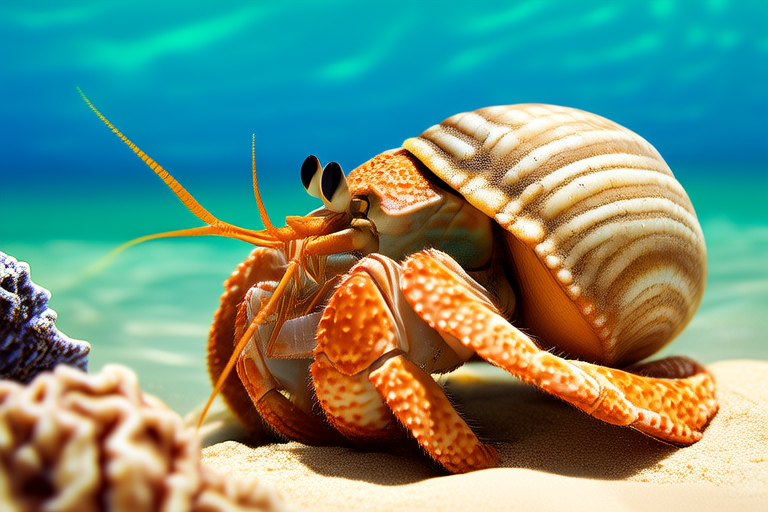
The most distinctive feature of hermit crabs is their reliance on discarded shells for protection. Unlike other crab species, they don’t grow their own hard exoskeletons. Instead, they seek out empty mollusk shells, which they carry around on their backs. This adaptation allows them to protect their soft abdomens from predators while still being able to move freely. Once they outgrow their current shell, they must search for a new one, leading to an interesting dynamic where larger shells become highly sought after. As one crab finds its perfect fit, it may even evict another hermit crab from its shell in a process called “shell fight.”
Fact 2: They Can Change Their Shell Instantly
Hermit crabs can be incredibly quick when it comes to changing shells. If a hermit crab finds itself in a vulnerable situation, such as a predator approaching or a storm threatening, it can swiftly abandon its current shell and find refuge in a nearby one. This ability to switch shells instantaneously is crucial for their survival, especially during critical moments. The next time you see a hermit crab scurrying along the beach, remember that it could be in the middle of a high-stakes shell swap!
Fact 3: Hermit Crabs Are Social Creatures
Contrary to popular belief, hermit crabs are not solitary animals. In fact, they are quite social and often live in large groups. These gatherings serve multiple purposes, including protection from predators and cooperation in finding food. Scientists have observed that hermit crabs engage in complex social behaviors, such as communicating through chemical signals and coordinating group movements. This social structure helps them thrive in their environments, making hermit crab colonies a sight to behold.
Fact 4: They Use Their Claws to Adapt to Different Environments
Hermit crabs have evolved two distinct claws, each serving a different purpose. The larger claw is primarily used for defense and grasping objects, while the smaller claw is more delicate, often employed for grooming or manipulating their surroundings. Interestingly, if a hermit crab loses its larger claw, it can regenerate it over time. However, in some cases, the smaller claw may grow larger to compensate for the loss, showcasing the incredible adaptability of these creatures. This dual-claw system is just one example of how hermit crabs have fine-tuned their anatomy to survive in diverse habitats.
Fact 5: Hermit Crabs Can Live for Decades
Believe it or not, hermit crabs can live for up to 30 years in the wild. This longevity is attributed to their slow growth rate and protective shell lifestyle, which reduces exposure to environmental hazards. In captivity, however, their lifespan can be significantly shorter due to factors like poor nutrition and stress. Despite this, hermit crabs remain a popular choice for exotic pets, with many owners providing enriched environments to ensure their long-term health and happiness. As these tiny creatures age, they continue to fascinate us with their resilience and adaptability.
Fact 6: They Communicate Through Chemical Signals
Hermit crabs have developed an intricate system of communication based on chemical signals. By releasing pheromones, they can convey messages to other members of their species, such as warnings about potential threats or invitations to join in a communal activity. This form of chemical communication plays a vital role in maintaining social cohesion within hermit crab communities. It also aids in coordinating behaviors like mating and foraging, ensuring the survival of the group as a whole. Understanding these chemical signals has opened up new avenues for research into the social dynamics of marine life.
Fact 7: Hermit Crabs Are Omnivorous
Hermit crabs are opportunistic feeders, meaning they will eat almost anything they come across. Their diet typically consists of algae, decaying plant matter, and small marine organisms. This varied diet allows them to thrive in a wide range of environments, from shallow coastal waters to deep-sea trenches. In addition to scavenging for food, hermit crabs have been observed engaging in cooperative feeding, where individuals work together to break down larger pieces of food. This behavior demonstrates their resourcefulness and ability to adapt to changing conditions.
Fact 8: They Have Excellent Night Vision
Hermit crabs are primarily nocturnal creatures, spending much of their day hidden away in their shells. To navigate their environment at night, they rely on excellent night vision, which allows them to detect movement and avoid predators. This heightened sense of sight is particularly useful for spotting potential mates or food sources in low-light conditions. Additionally, hermit crabs have sensitive antennae that help them detect vibrations in the water, further enhancing their ability to locate prey and stay safe.
Fact 9: Hermit Crabs Play a Crucial Role in Marine Ecosystems
Despite their relatively small size, hermit crabs play an essential role in maintaining the balance of marine ecosystems. By consuming dead plant and animal matter, they help recycle nutrients back into the environment, supporting the growth of new life. Additionally, their burrowing activities contribute to the formation of sediment structures, which provide shelter for other marine species. This interconnectedness highlights the importance of hermit crabs in preserving the delicate balance of underwater habitats.
Fact 10: They Can Survive Out of Water for Extended Periods
One of the most surprising aspects of hermit crab biology is their ability to survive out of water for extended periods. While they require moisture to breathe through gills, hermit crabs have adapted to tolerate dry conditions by sealing themselves inside their shells. During times of drought or low tide, they can conserve water and energy, waiting for more favorable conditions to return. This adaptation allows them to inhabit a wider range of coastal environments, from sandy beaches to rocky shorelines. As we explore the limits of hermit crab endurance, we gain a deeper appreciation for the incredible diversity of life on our planet.
In conclusion, hermit crabs are truly remarkable creatures with a wealth of fascinating traits and behaviors. From their shell-swapping antics to their complex social structures, these tiny crustaceans offer endless opportunities for discovery and wonder. Whether you’re a seasoned marine biologist or simply someone who enjoys learning about the natural world, there’s always something new to learn about hermit crabs. So next time you encounter one of these curious creatures, take a moment to appreciate the amazing adaptations that have allowed them to thrive in their unique corner of the ocean.
