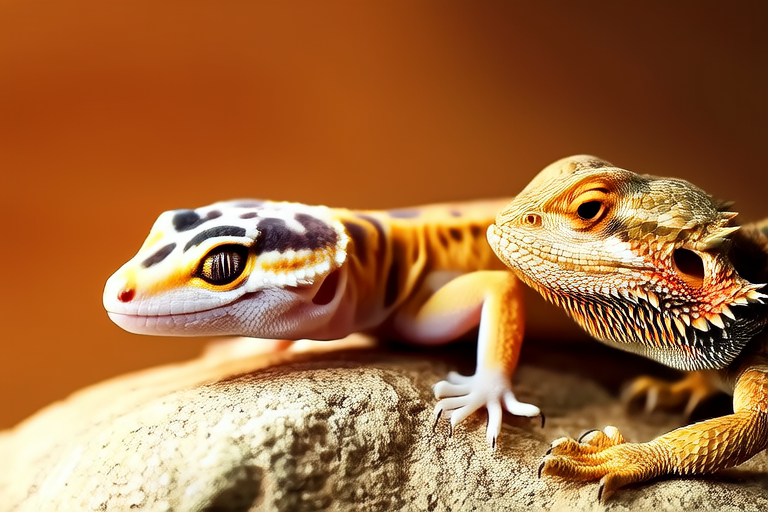
Leopard Geckos vs Bearded Dragons: A Comprehensive Comparison
Welcome to the fascinating world of reptile companions! Whether you’re an experienced herpetologist or a first-time reptile owner, selecting the right pet can be an exciting yet daunting task. Two of the most popular choices among reptile enthusiasts are Leopard Geckos and Bearded Dragons. In this comprehensive guide, we will delve into the care requirements, temperament, appearance, dietary needs, and space requirements of both species. We’ll also discuss the pros and cons of each as pets, their interaction with humans, and provide valuable tips for first-time reptile owners. By the end of this article, you’ll have all the information you need to make an informed decision about which reptile would make the perfect companion.
Care Requirements
Leopard Geckos
Leopard Geckos are relatively easy to care for, making them an excellent choice for beginners. They require a simple setup consisting of a glass tank or terrarium with a secure lid, substrate (such as coconut fiber or paper towels), hiding spots, and a shallow water dish. Temperature gradients within the enclosure are crucial; one end should be warmer (around 88-90°F) for basking, while the cooler end should be around 75-78°F. Leopard Geckos are nocturnal, so they don’t need UVB lighting but benefit from a low-level red bulb for night vision.
Maintenance involves spot cleaning the enclosure daily and performing a thorough clean every few weeks. Leopard Geckos shed their skin periodically, and it’s important to ensure that they eat the shed skin to maintain proper nutrition.
Bearded Dragons
Bearded Dragons require more extensive care compared to Leopard Geckos. They need a larger enclosure, typically a 40-gallon or bigger tank, with a secure mesh top to allow for proper ventilation. The substrate can be reptile carpet, newspaper, or specially designed reptile sand. Bearded Dragons also require UVB lighting to synthesize vitamin D3, which aids in calcium absorption. A heat lamp should provide a basking spot of around 100-110°F, while the cooler end of the enclosure should be around 80-85°F. Nighttime temperatures can drop to 65-70°F.
Maintenance includes regular cleaning of the enclosure, providing fresh water daily, and monitoring humidity levels to prevent respiratory issues. Bearded Dragons also need to be misted occasionally to aid shedding and hydration.
Temperament
Leopard Geckos
Leopard Geckos are known for their docile and calm nature, making them great pets for children and those new to reptile ownership. They rarely bite and are generally unbothered by handling. However, it’s essential to handle them gently and avoid disturbing them during their active periods at night.
Bearded Dragons
Bearded Dragons have a friendly and curious temperament. They enjoy interaction and can become quite tame with regular handling. They may exhibit defensive behaviors like puffing up their beards and opening their mouths if startled, but these actions are usually harmless. With patience and consistent handling, Bearded Dragons can become affectionate and responsive to their owners.
Appearance
Leopard Geckos
Leopard Geckos are small, stocky lizards with distinctive patterns resembling leopard spots. They come in various colors, including yellow, cream, and orange, often with dark spots or stripes. Their tails are thick and tapering, and they have large eyes with vertical pupils. These geckos grow to about 8-10 inches in length, making them compact and easy to handle.
Bearded Dragons
Bearded Dragons are medium-sized lizards with broad, triangular heads and spiky scales along their throats and sides. They have long limbs and a tail that can be used for balance. Their coloration ranges from brown and tan to vibrant oranges and reds. Male Bearded Dragons can grow up to 20 inches in length, including the tail, and females tend to be slightly smaller. Their distinctive beard is made up of enlarged scales that can darken when the lizard feels threatened.
Dietary Needs
Leopard Geckos
Leopard Geckos are insectivores, primarily feeding on crickets, mealworms, and waxworms. It’s important to gut-load feeder insects with nutritious food before offering them to your gecko. You can also offer occasional treats like dubia roaches or hornworms. Dusting the insects with calcium and vitamin D3 supplements is necessary to prevent metabolic bone disease. Leopard Geckos should have access to a shallow water dish for hydration.
Bearded Dragons
Bearded Dragons are omnivorous, meaning they eat both plant matter and insects. Their diet should consist of leafy greens, vegetables, fruits, and insects. Dark, leafy greens such as collard greens, mustard greens, and dandelion greens are excellent choices. Vegetables like squash, bell peppers, and carrots can be offered in moderation. Fruits like berries and melons can be given sparingly due to their high sugar content. Insects, such as crickets, dubia roaches, and superworms, should be dusted with calcium and vitamin D3 supplements and offered in appropriate quantities based on the dragon’s age and size.
Space Requirements
Leopard Geckos
Leopard Geckos require less space than Bearded Dragons. A 10-20 gallon tank is sufficient for a single adult gecko. This makes them ideal for apartment dwellers or those with limited living space. Leopard Geckos are ground-dwelling creatures, so the enclosure should have enough horizontal space for them to move around comfortably.
Bearded Dragons
Bearded Dragons need significantly more space. A 40-gallon or larger tank is recommended for a single adult dragon. The enclosure should provide ample room for climbing, basking, and exploring. Vertical space is essential, so consider adding branches, rocks, or other climbing structures. Bearded Dragons also require a large basking area and a cooler area for temperature regulation.
Pros and Cons
Leopard Geckos
- Pros:
- Easy care and maintenance
- Low space requirement
- Docile and gentle temperament
- Inexpensive to feed and house
- Cons:
- Less interactive compared to Bearded Dragons
- Limited color variations
Bearded Dragons
- Pros:
- Interactive and social nature
- Variety of colors and patterns
- Can live up to 10 years with proper care
- Adaptable to different environments
- Cons:
- Higher care requirements
- More expensive to feed and house
- May require more frequent vet visits
Interaction with Humans
Leopard Geckos
Leopard Geckos are not as interactive as Bearded Dragons but can still form bonds with their owners. They enjoy being handled gently and can become accustomed to regular interactions. However, they are generally more reserved and may not seek out human contact as frequently as Bearded Dragons.
Bearded Dragons
Bearded Dragons are highly interactive and enjoy spending time with their owners. They can be trained to sit on shoulders, hands, or even walk on leashes. Bearded Dragons often display curiosity and respond positively to handling, making them ideal for owners who want a more engaged relationship with their pet.
Tips for First-Time Reptile Owners
Choosing the right reptile companion is an important decision. Here are some tips to help you make the best choice:
- Research extensively: Learn about the specific needs, care requirements, and behavior of the reptile you’re interested in.
- Visit local reptile stores: Speak with knowledgeable staff and observe different species to get a better understanding of their characteristics.
- Consider your lifestyle: Think about how much time and effort you’re willing to dedicate to caring for your pet.
- Prepare adequately: Ensure you have the necessary equipment, such as tanks, heating devices, and food, before bringing your reptile home.
- Consult experts: Reach out to reptile veterinarians or experienced hobbyists for advice and guidance.
Choosing Between Leopard Geckos and Bearded Dragons
When deciding between Leopard Geckos and Bearded Dragons, consider the following factors:
- Experience level: If you’re a first-time reptile owner, Leopard Geckos might be the better option due to their lower care requirements.
- Living space: Leopard Geckos require less space, making them suitable for those with limited living areas.
- Desired interaction: If you want a more interactive pet, Bearded Dragons are likely the better choice.
- Budget: Consider the cost of food, housing, and veterinary care when making your decision.
Ultimately, both Leopard Geckos and Bearded Dragons make wonderful pets for the right owner. By carefully considering your preferences, lifestyle, and the specific needs of each species, you can find the perfect reptile companion to share your home with.
