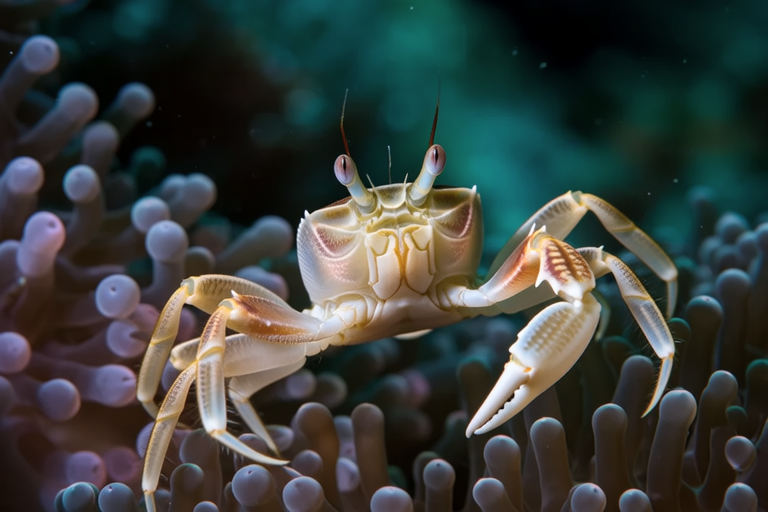
The Fascinating World of Pea Crabs: Microscopic Marvels of the Sea
Pea crabs, belonging to the family Pinnotheridae, are some of the smallest crabs in the ocean, typically measuring just a few millimeters in size. These tiny crustaceans have captured the imagination of marine biologists and nature enthusiasts alike due to their unique characteristics, intricate symbiotic relationships, and the secrets they hold within their microscopic bodies. Let’s dive into the captivating world of pea crabs and explore what makes them such a remarkable species.
Anatomy: A Tiny but Mighty Structure
Despite their diminutive size, pea crabs possess all the essential anatomical features of their larger crab relatives. Their exoskeleton, or carapace, is hard and protective, providing defense against predators. The carapace of pea crabs is often oval-shaped, with smooth edges and no distinct spines or claws, which sets them apart from other crab species. They have five pairs of legs, each adapted for different functions. The first pair of legs, known as chelipeds, are used for feeding, while the remaining four pairs assist in locomotion and manipulation of objects. Additionally, pea crabs have compound eyes and antennae that help them navigate and detect food sources in their aquatic environment.
Symbiotic Relationships: Living in Harmony
One of the most intriguing aspects of pea crabs is their symbiotic relationship with various marine organisms. These crabs live inside the mantle cavities of bivalve mollusks, such as oysters, mussels, and clams, where they find shelter and protection from predators. In exchange, pea crabs consume the mucus and detritus produced by their hosts, thus helping to keep the host’s internal environment clean. This mutually beneficial relationship allows both the pea crab and its host to thrive in their respective ecological niches. Some species of pea crabs have even evolved to be obligate symbionts, meaning they cannot survive outside of their host’s body.
Behavior: Hidden Depths of the Ocean
Pea crabs lead a secretive life within the confines of their host’s mantle cavity. They are primarily nocturnal, emerging at night to feed on the organic matter present in the water. During the day, they remain hidden, conserving energy and avoiding potential threats. While little is known about their social behaviors, it is believed that they are solitary creatures, with each individual occupying its own space within the host. This lifestyle allows pea crabs to avoid competition for resources and reduces the risk of predation.
Reproduction: A Delicate Process
The reproductive cycle of pea crabs is a delicate process that ensures the continuation of their species. Males and females engage in a courtship dance, during which they release pheromones to attract a mate. Once a pair has formed, they copulate inside the host’s mantle cavity. After mating, the female carries fertilized eggs attached to her abdomen until they hatch. The newly hatched larvae, called zoea, swim freely in the water column before eventually settling on a suitable host. This reproductive strategy ensures that pea crabs can colonize new areas and adapt to changing environmental conditions.
Ecological Niches: Thriving in Specialized Environments
Pea crabs have adapted to thrive in a wide range of marine environments, from shallow coastal waters to deep-sea habitats. Their small size and specialized anatomy allow them to exploit narrow spaces within the shells of their hosts, making them well-suited for life in crowded ecosystems. Additionally, their ability to tolerate varying levels of salinity and temperature enables them to inhabit diverse regions across the globe. This adaptability has contributed to the success of pea crabs in maintaining their populations despite the challenges posed by environmental changes.
Current Research: Uncovering New Insights
Recent studies have shed light on the complex interactions between pea crabs and their hosts, revealing previously unknown aspects of their biology. Researchers have discovered that some species of pea crabs can influence the growth and health of their hosts through their feeding activities. For example, by consuming excess organic matter, pea crabs may help regulate the internal environment of their hosts, promoting optimal conditions for growth and reproduction. Furthermore, ongoing research is exploring the potential applications of pea crabs in aquaculture, where they could be used as biocontrol agents to maintain healthy populations of farmed bivalves.
Threats to Survival: Navigating Challenges
Despite their resilience, pea crabs face several threats that could jeopardize their survival. Habitat destruction, caused by human activities such as coastal development and pollution, poses a significant risk to these tiny creatures. Additionally, overfishing of their hosts can reduce the availability of suitable living spaces for pea crabs, forcing them to compete for limited resources. Climate change also presents a challenge, as rising temperatures and ocean acidification may affect the ability of pea crabs to reproduce and thrive in their natural habitats. Conservation efforts aimed at protecting marine ecosystems and preserving biodiversity are crucial for ensuring the continued existence of pea crabs and the valuable roles they play in their ecosystems.
Conclusion: A Microscopic Marvel
Pea crabs are truly a microscopic marvel of the ocean, with their unique anatomy, symbiotic relationships, and fascinating behaviors. From their tiny exoskeletons to their intricate reproductive processes, these crabs have adapted to thrive in specialized ecological niches. By studying pea crabs, we gain valuable insights into the complexity of marine ecosystems and the importance of preserving biodiversity. As we continue to uncover the secrets of these tiny crustaceans, let us appreciate the role they play in maintaining the delicate balance of life beneath the waves.
