The Historical Journey of Siamese Cats: From Royal Temples to Global Companions
Siamese cats have captivated human hearts for centuries, embodying elegance, grace, and mystery. Their story is one of royal heritage, cultural significance, and global popularity. This article explores the origins and historical journey of Siamese cats, tracing their path from ancient temples in Siam (modern-day Thailand) to their modern presence in homes around the world.
The Origins of Siamese Cats
The Siamese cat’s origin story begins in the ancient kingdom of Siam, now known as Thailand. These cats were highly revered and often associated with royalty and religious institutions. They were believed to possess mystical powers and were kept in temples and palaces, where they were thought to protect the inhabitants from evil spirits. The first documented records of Siamese cats date back to the 14th century, when they were mentioned in the Tamra Maew, an ancient manuscript about cats.
Initial Roles and Physical Characteristics
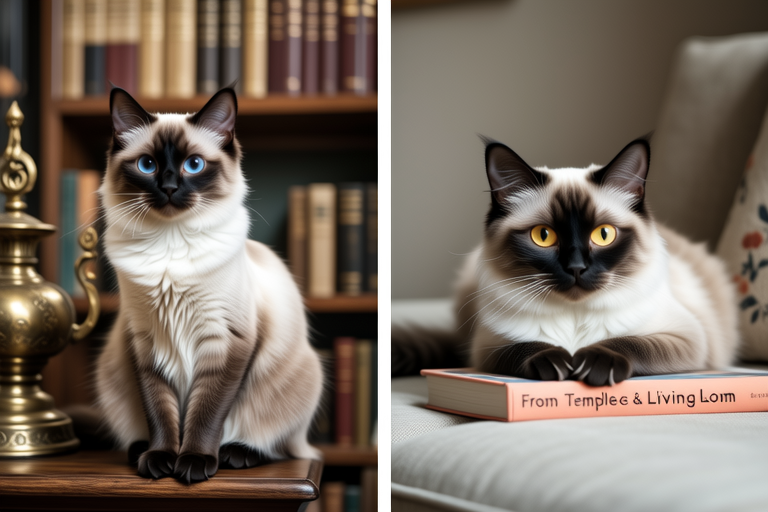
Siamese cats played various roles in their early days. In addition to being protectors, they were also companions to monks and nobility. Their striking appearance, with blue almond-shaped eyes, a slender body, and dark points on their ears, tails, paws, and faces, made them stand out among other breeds. Their vocal nature and intelligence also contributed to their appeal, making them excellent conversationalists and problem solvers.
Cultural Significance
In Thai culture, Siamese cats were considered sacred animals. They were often depicted in art and literature, symbolizing good fortune and protection. The cats were believed to be able to sense danger and warn their owners of impending threats. Their association with the royal family further elevated their status, and they became symbols of wealth and power.
Perception Across Different Societies
The perception of Siamese cats varied across different societies. In Siam, they were held in high regard and treated with reverence. However, when Westerners first encountered these cats in the late 19th century, they were initially met with curiosity and fascination. The unique appearance of the Siamese cat was unlike anything the West had seen before, and it quickly gained attention. Despite their exotic allure, some Westerners found the cats’ vocalizations and active demeanor challenging, leading to mixed reactions.
Pivotal Events and Individuals
Several pivotal events and individuals contributed to the global spread of Siamese cats. One of the most significant events was the gift of Siamese cats to Queen Victoria in 1871 by the British Consul-General in Bangkok, Edward Blencowe Gould. This act marked the first time Siamese cats were introduced to Europe, and they quickly became a sensation. The queen’s admiration for the breed helped establish its reputation and paved the way for its acceptance in Europe and beyond.
Another key figure in the history of Siamese cats was the American breeder Jane Robinson, who played a crucial role in establishing the breed in the United States. She founded the Siamese Cat Club in 1909 and worked tirelessly to promote the breed’s recognition and standardization. Her efforts laid the foundation for the breed’s success in America and contributed to its growing popularity worldwide.
Evolution into Popular Pets
As the 20th century progressed, Siamese cats evolved from being rare and exotic creatures to beloved pets in homes around the world. Advances in transportation and communication facilitated the global exchange of cats, allowing breeders to refine and standardize the breed. The Siamese cat’s adaptability, intelligence, and affectionate nature made it an ideal companion for many households. By the mid-20th century, the breed had become one of the most popular cat breeds in the United States and Europe.
The rise of cat shows and competitions also played a significant role in promoting the Siamese cat. These events provided a platform for breeders to showcase their cats and compete for titles, further enhancing the breed’s reputation and desirability. The Siamese cat’s participation in these events helped establish it as a breed of distinction and quality.
Variations and Modern Breeds
Over time, variations of the original Siamese cat emerged, leading to the development of new breeds. One such variation is the Balinese cat, which is essentially a long-haired version of the Siamese. Another variation is the Oriental Shorthair, which shares many characteristics with the Siamese but has a wider range of coat colors and patterns. These variations have expanded the Siamese cat’s legacy and ensured its continued relevance in the world of cat breeding.
Challenges and Controversies
Despite their popularity, Siamese cats have faced challenges and controversies throughout history. One of the most significant challenges has been the breed’s health issues, particularly those related to inbreeding. Over time, breeders have worked to address these concerns and improve the overall health of the breed. Additionally, the Siamese cat’s vocal nature and strong personality have sometimes led to misunderstandings and misconceptions about the breed. However, responsible breeding practices and education have helped dispel these myths and ensure the breed’s continued success.
Conclusion
The journey of Siamese cats from their royal roots in ancient temples of Siam to their modern presence in homes around the world is a testament to their enduring appeal and adaptability. Their unique appearance, intelligence, and affectionate nature have made them cherished companions for centuries. As we look to the future, it is clear that Siamese cats will continue to captivate and inspire, maintaining their place as one of the most beloved cat breeds in the world.
