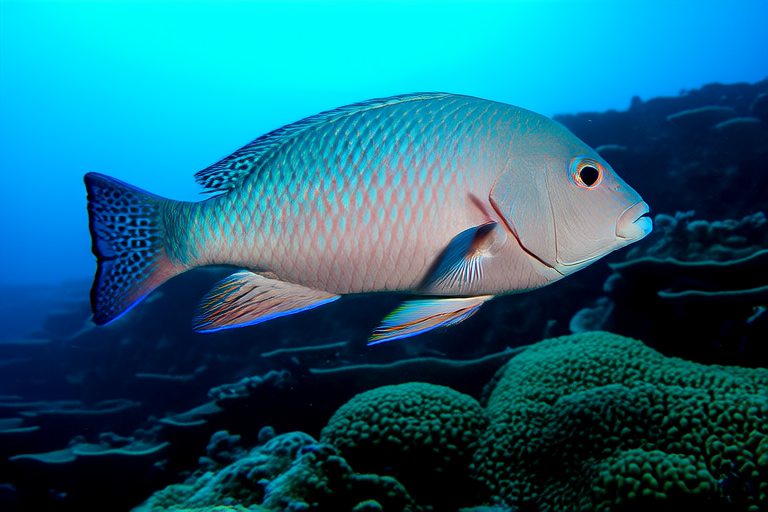
The Diverse World of Parrot Fish: A Journey Through Colorful Marine Wonders
Parrot fish, members of the family Labridae, are among the most dazzling inhabitants of coral reefs, tropical seas, and shallow waters. Their vibrant colors and intricate patterns have long captivated divers, scientists, and casual observers alike. With over 90 species distributed across the globe, these fish offer a kaleidoscope of hues and designs that serve multiple purposes, from camouflage to courtship.
Habitats and Distribution
Parrot fish are primarily found in tropical and subtropical waters, inhabiting coral reefs, rocky shores, and seagrass beds. They prefer areas with abundant algae, which form a crucial part of their diet. The majority of parrot fish species reside in the Indian and Pacific Oceans, with some also thriving in the Atlantic Ocean. These regions provide ideal conditions for their survival, including warm temperatures, clear waters, and rich biodiversity.
Diverse Colors and Patterns
Their namesake beak-like mouths, equipped with fused teeth, give parrot fish their distinctive appearance. Beyond this, their bodies are adorned with an array of colors and patterns that vary depending on the species and their life stages. Juvenile parrot fish often display more subdued colorations compared to adults, gradually developing brighter shades as they mature. For example, the queen parrot fish (Scarus vetula) starts its life as a dull brown or green, only to transform into a striking blue-green adult with yellow stripes and a red tail.
Camouflage and Mating Displays
The vivid hues and intricate markings of parrot fish serve several vital functions. One of the primary purposes is camouflage, enabling them to blend seamlessly with their surroundings and avoid predators. In addition to blending in, certain species use their bright colors during mating displays. For instance, male blue-green parrot fish (Scarus coelestinus) exhibit brilliant electric blue hues when courting females, signaling their fitness and attracting potential mates.
Behaviors and Roles in Marine Ecosystems
Parrot fish play essential roles in maintaining the health and structure of coral reefs. By grazing on algae and other plant matter, they help control algal growth, promoting the growth of coral polyps. This process, known as bioerosion, involves parrot fish biting off pieces of coral and grinding them into sand, contributing to the formation of beaches. Their feeding habits also create spaces for new coral colonies to establish themselves.
Interesting Facts About Different Species
- Stoplight Parrotfish (Sparisoma viride): This species is easily recognizable by its orange body and blue spots, resembling a stoplight. It feeds mainly on sponges and algae, playing a crucial role in reef ecosystems.
- Queen Parrotfish (Scarus vetula): As mentioned earlier, this species boasts a striking blue-green coloration with yellow stripes and a red tail. It can change its color rapidly, adapting to different situations and environments.
- Bicolor Parrotfish (Cetoscarus bicolor): Known for its distinct two-tone coloration, this species features a light blue upper body and dark blue lower body. It is one of the largest parrot fish species, growing up to 1.2 meters in length.
Conservation Efforts
Despite their importance to marine ecosystems, many parrot fish populations face threats due to overfishing, habitat destruction, and climate change. To address these challenges, various conservation initiatives have been implemented. Marine protected areas (MPAs) have been established to safeguard critical habitats and allow fish populations to recover. Additionally, sustainable fishing practices are being promoted to ensure the long-term viability of parrot fish fisheries.
Awe-Inspiring Descriptions
Imagine diving into a vibrant coral reef teeming with life. As you descend deeper, you notice flashes of color darting between the corals. Suddenly, a school of stoplight parrot fish swims past, their orange bodies and blue spots creating a mesmerizing spectacle. Further along, you spot a bicolor parrotfish gliding gracefully through the water, its two-tone body contrasting beautifully against the surrounding environment. Each encounter with these colorful creatures leaves you in awe of nature’s creativity and the delicate balance of marine ecosystems.
As you continue your exploration, you come across a queen parrotfish, its electric blue hues shimmering under the water’s surface. Its rapid color changes demonstrate the remarkable adaptability of these fish, allowing them to thrive in their dynamic underwater world. Witnessing the intricate patterns and dazzling colors of parrot fish is a humbling experience, reminding us of the beauty and complexity of our planet’s oceans.
In conclusion, parrot fish are not only visually stunning but also play vital roles in maintaining the health and diversity of marine ecosystems. By understanding and appreciating these fascinating creatures, we can work towards preserving their habitats and ensuring their continued existence for future generations to marvel at.
