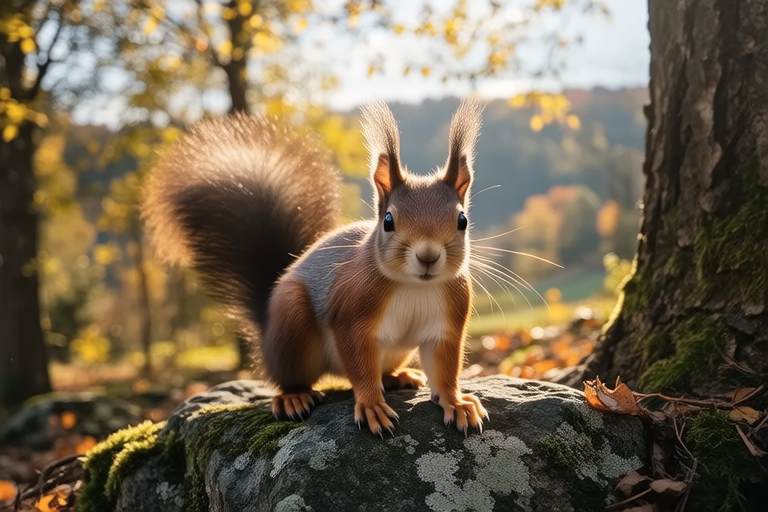
Differences in Habitat Suitability for Squirrels Between Urban Environments and Rural Settings
Squirrels are common sights in both urban and rural landscapes, but their experiences in these different environments vary significantly. This article explores the differences in habitat suitability for squirrels between urban environments and rural settings, focusing on factors like food availability, shelter options, human interaction levels, and safety from predators.
Food Availability: A Feast or Famine?
In urban areas, food is often abundant due to human activities. Gardens, parks, and public spaces provide an array of fruits, nuts, and seeds. Additionally, people feed squirrels intentionally, offering supplementary sustenance. This constant supply of food supports higher squirrel populations in cities compared to rural areas where natural food sources can be more scattered and seasonal.
However, the quality of urban food can be lower than that found in nature. For instance, squirrels may consume less nutritious human foods, leading to potential health issues. In contrast, rural areas offer a diverse diet of acorns, pine cones, mushrooms, and insects. This variety ensures better nutrition and overall health for rural squirrels.
Scientific studies have shown that urban squirrels tend to be smaller and less healthy than their rural counterparts due to the abundance of low-quality food. For example, a study conducted by the University of California, Berkeley, found that urban squirrels had higher rates of obesity and diabetes than rural ones. Anecdotal evidence also suggests that squirrels in cities are more likely to beg for food from humans, a behavior rarely observed in rural areas.
Shelter Options: The Great Indoors vs. the Great Outdoors
Urban environments provide numerous shelter opportunities, including buildings, attics, and dense vegetation in parks. These structures offer protection from harsh weather conditions and predators. In contrast, rural areas feature fewer man-made shelters, with squirrels relying mainly on tree hollows, burrows, and dens constructed from leaves and twigs.
The choice of shelter can impact a squirrel’s ability to survive. Urban squirrels may benefit from insulation provided by buildings, but they also face risks associated with proximity to humans. Rural squirrels, while more exposed to the elements, enjoy greater privacy and freedom from human disturbances.
A study published in the Journal of Wildlife Management found that urban squirrels were more likely to nest in buildings than rural squirrels. However, this behavior came with its own set of challenges. Urban squirrels faced higher risks of injury or death from collisions with vehicles or encounters with domestic pets. In contrast, rural squirrels had to contend with natural predators such as hawks, foxes, and coyotes.
Human Interaction Levels: Friend or Foe?
Humans interact more frequently with urban squirrels, providing both benefits and drawbacks. Positive interactions include feeding and protecting them from harm. However, negative interactions, such as car accidents or conflicts over territory, can also occur. In rural settings, human contact is less frequent, reducing stress but also limiting access to supplementary food sources.
Positive human interactions can enhance squirrel survival by providing additional food and protection. For instance, some homeowners in urban areas create bird feeders specifically for squirrels, ensuring a steady supply of food throughout the year. Negative interactions, however, can lead to injuries or death. A study published in the Journal of Mammalogy found that urban squirrels were more likely to suffer from injuries caused by cars or domestic pets than rural squirrels.
Despite the risks, many urban squirrels have adapted to living alongside humans, learning to navigate sidewalks, cross roads, and even use public transportation. In contrast, rural squirrels are more wary of human presence, spending more time in trees and avoiding open areas. This difference in behavior has been observed in various studies, including one conducted by the University of Georgia, which found that urban squirrels were more likely to approach humans than rural squirrels.
Safety from Predators: The City vs. the Country
Predation patterns differ between urban and rural settings. Urban areas generally have fewer natural predators, but the presence of domestic animals, such as cats and dogs, poses significant threats. Rural areas, while safer from domestic predators, still face challenges from native species like hawks, foxes, and coyotes.
Urban squirrels face unique dangers, such as vehicle collisions and attacks from domestic pets. A study published in the Journal of Wildlife Diseases found that urban squirrels were more likely to suffer from injuries caused by cars or domestic pets than rural squirrels. In contrast, rural squirrels face natural predators such as hawks, foxes, and coyotes, but they have developed strategies to avoid predation, such as nesting high in trees or creating dens in hard-to-reach locations.
The absence of natural predators in urban areas can lead to overpopulation, as there are fewer checks on squirrel numbers. This can result in increased competition for resources and potential conflicts with humans. In contrast, rural areas maintain a balance between predator and prey populations, ensuring a healthier ecosystem.
Behavioral Adaptations: Living in Harmony with Humans
Urban squirrels have adapted to life among humans, developing behaviors that help them thrive in cities. They have learned to navigate sidewalks, cross roads, and even use public transportation. In contrast, rural squirrels remain more cautious around humans, spending more time in trees and avoiding open areas.
Urban squirrels have also developed unique social structures, forming larger groups and cooperating more closely. This cooperation can be seen in shared nesting sites and communal foraging efforts. In contrast, rural squirrels tend to be more solitary, with individuals defending their territories against intruders.
These behavioral adaptations highlight the versatility of squirrels in adapting to different environments. While urban squirrels have embraced life among humans, rural squirrels have maintained a more traditional lifestyle, relying on natural resources and avoiding human interference.
Conclusion: A Tale of Two Habitats
The differences in habitat suitability for squirrels between urban environments and rural settings are significant. Urban areas offer abundant food and shelter, but come with risks from domestic predators and human activity. Rural areas provide a more natural environment, with fewer human interactions and more exposure to natural predators. Understanding these differences can help us appreciate the adaptability of squirrels and the importance of maintaining healthy ecosystems for all wildlife.
As we continue to develop urban areas and encroach on rural lands, it is crucial to consider the impacts on wildlife. By understanding the needs and behaviors of squirrels and other animals, we can work towards creating balanced ecosystems that support both human and animal populations. Whether in the city or the countryside, squirrels play an important role in our environment, and it is up to us to ensure their continued survival.
