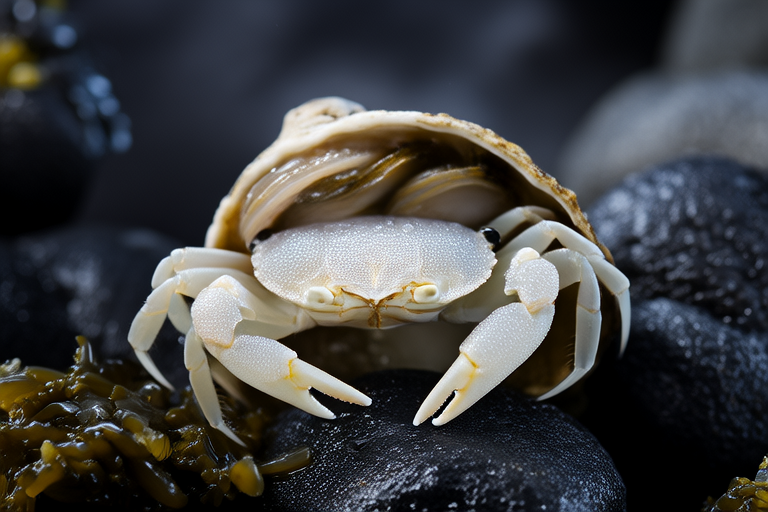
Pea Crab: The Hidden Gem Inside Oysters and Mollusks
The world of marine biology is full of fascinating creatures, each playing a unique role in the delicate balance of oceanic ecosystems. One such intriguing organism is the pea crab, a tiny crustacean that has evolved an extraordinary symbiotic relationship with oysters and other mollusks. This article delves into the world of pea crabs, exploring their anatomy, lifestyle, geographical distribution, and cultural significance.
An Introduction to Pea Crabs
Pea crabs, belonging to the family Pinnotheridae, are small, soft-bodied crabs that live exclusively as commensals within the mantle cavity of bivalve mollusks, particularly oysters. Their name aptly describes their size, which typically ranges from 5 to 15 millimeters in length, making them comparable to the size of a pea. These crabs have adapted to life within their hosts, developing flattened bodies and long legs that help them maneuver through the narrow spaces within the bivalves.
The Symbiotic Relationship
The pea crab’s relationship with its host is a prime example of commensalism, where one species benefits without affecting the other. For the pea crab, the bivalve shell provides protection from predators and a stable environment rich in food resources. Within the host’s mantle cavity, the pea crab finds abundant detritus, algae, and plankton to feed on. This arrangement allows the pea crab to thrive without competing directly with its host for food.
While the pea crab benefits significantly from this relationship, the impact on the host varies. In some cases, the presence of pea crabs may slightly hinder the growth of the host due to competition for nutrients. However, the overall effect is generally minimal, and many bivalves coexist harmoniously with their tiny guests.
Anatomy and Appearance
The anatomy of a pea crab is designed for life within its host. Their carapaces are soft and flexible, allowing them to fit snugly into the bivalve’s mantle cavity. They possess large, paddle-like appendages called maxillipeds, which they use to filter-feed on the detritus and plankton available within the host’s environment. Unlike most crabs, pea crabs lack a hard exoskeleton, which makes them highly adaptable to their confined living space.
In terms of appearance, pea crabs are often translucent, with a brownish tint. Their coloration helps them blend in with their surroundings, providing additional camouflage against potential threats. Despite their small size, pea crabs are quite active within their hosts, moving around to find food and navigate their environment.
Geographical Distribution and Habitats
Pea crabs are widely distributed across the globe, inhabiting coastal waters and estuaries where their hosts are prevalent. They are found in both temperate and tropical regions, with species adapted to various environmental conditions. Some common habitats include rocky shores, sandy beaches, and areas with extensive seagrass beds. These environments provide ample opportunities for the pea crabs to find suitable hosts and establish their commensal relationships.
One notable species, Pinnixa faba, is native to the eastern coast of North America, ranging from Canada to Florida. Another species, Pinnixa littoralis, is found along the western coast of the United States, from Alaska to California. These crabs have also been documented in Europe, Asia, and Australia, showcasing their adaptability to diverse marine ecosystems.
Cultural and Culinary Significance
The presence of pea crabs within their hosts has cultural and culinary implications in certain regions. In some parts of the world, finding a pea crab inside an oyster is considered a sign of good luck. This belief stems from the idea that the crab’s presence indicates the oyster’s health and vitality, making it a desirable catch.
From a culinary perspective, the inclusion of pea crabs in dishes adds an element of surprise and intrigue. While not commonly consumed on their own, the crabs are sometimes eaten along with their hosts, particularly in Asian cuisines. Their soft, sweet flesh contrasts nicely with the briny flavor of the oyster, creating a unique gastronomic experience for adventurous diners.
Recent Research and Interesting Facts
Recent studies have shed light on the complex interactions between pea crabs and their hosts. Researchers have discovered that the presence of pea crabs can influence the reproductive success of their hosts. In some cases, the crabs may stimulate the production of more eggs, potentially increasing the population of both species. This mutualistic aspect of their relationship highlights the intricate balance maintained within marine ecosystems.
Another fascinating discovery is the ability of pea crabs to regulate the water quality within their hosts. By filtering out harmful bacteria and debris, the crabs contribute to maintaining a healthier environment for both themselves and their hosts. This symbiotic cleansing process underscores the importance of even the smallest organisms in the broader marine ecosystem.
Interestingly, scientists have also observed that pea crabs can change their behavior based on environmental factors. When faced with stressors such as pollution or temperature changes, the crabs may alter their feeding patterns or move to different locations within the host to optimize their survival. This adaptive behavior demonstrates the resilience of these tiny creatures in the face of environmental challenges.
Conclusion
The pea crab is a remarkable creature that exemplifies the wonders of marine biology and symbiotic relationships. From their unique adaptations to their significant roles within their hosts’ ecosystems, pea crabs offer valuable insights into the interconnectedness of life in the oceans. Whether viewed as symbols of good fortune, culinary novelties, or subjects of scientific inquiry, pea crabs continue to captivate researchers and enthusiasts alike. As we deepen our understanding of these hidden gems, we gain a greater appreciation for the complexity and beauty of the underwater world.
