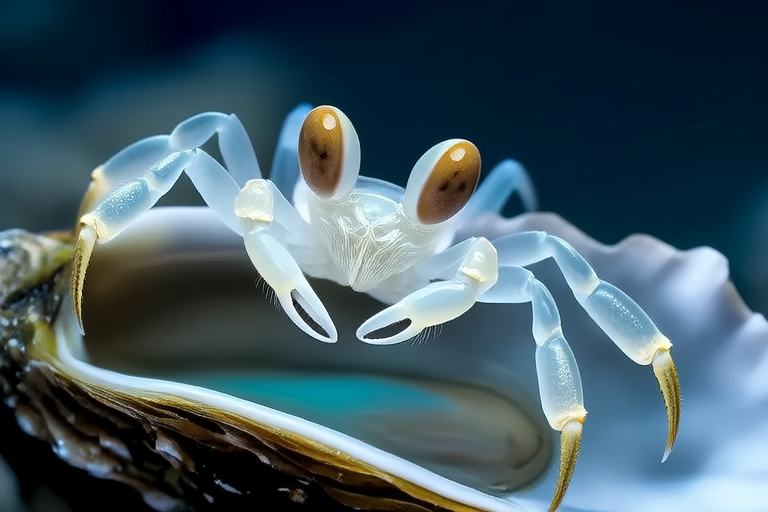
Meet the Tiny Pea Crab: The Microscopic Marvel Hiding in Oysters
In the vast ocean, where countless creatures thrive in diverse ecosystems, one tiny inhabitant stands out for its unique lifestyle: the pea crab (Pinnotheres ostreum). This diminutive crustacean is known for its remarkable adaptation to living within the confines of an oyster’s shell. Measuring just a few millimeters in length, the pea crab has carved out a niche for itself that is both fascinating and essential for understanding marine symbiosis.
Anatomy and Habitat
The pea crab’s small size belies its complex anatomy. Its body is divided into two main parts: the cephalothorax, which houses the head and thorax, and the abdomen, which is tucked under the cephalothorax. The crab’s exoskeleton is soft and flexible, allowing it to maneuver through the narrow spaces within an oyster’s gills. Unlike most crabs, the pea crab lacks the large claws typical of its relatives, instead possessing small pincers perfect for grasping food particles within the oyster.
Pea crabs inhabit the mantle cavity of oysters, specifically within the gill chambers. Here, they find shelter from predators and a steady supply of nutrients. The oyster provides a protective shell, while the pea crab benefits from the constant flow of water through the oyster’s gills, which brings in plankton and other organic matter.
Symbiotic Relationship
The relationship between the pea crab and its host is a classic example of mutualism. While the pea crab derives protection and sustenance from the oyster, the oyster also gains from this arrangement. Studies have shown that oysters hosting pea crabs tend to grow faster and are more resistant to disease. This suggests that the presence of the pea crab may help regulate the oyster’s environment, possibly by consuming parasites or harmful bacteria.
The pea crab’s feeding habits are particularly intriguing. It uses its mouthparts to filter feed on the detritus and plankton that enter the oyster’s gills. This activity not only provides the crab with nutrition but also helps clean the oyster’s respiratory system, potentially improving the oyster’s overall health.
Survival and Reproduction
Living within an oyster presents several challenges for the pea crab, yet it has adapted remarkably well. One of the key adaptations is its ability to reproduce within this confined space. Female pea crabs carry their eggs beneath their bodies, protecting them from harm. Once hatched, the larvae are released into the water column, where they must find a new oyster host. This process is fraught with danger, as many larvae may never find a suitable host and will perish.
The pea crab’s life cycle is closely tied to the reproductive cycle of its host. As the oyster grows, so too does the pea crab, ensuring a continuous supply of resources. This interdependence highlights the delicate balance of life within these microhabitats.
Challenges and Threats
Despite its adaptations, the pea crab faces numerous challenges. Climate change poses a significant threat, as rising sea temperatures can disrupt the delicate balance between the pea crab and its host. Additionally, pollution and overfishing can affect the availability of suitable hosts, reducing the pea crab’s chances of survival.
The oyster, too, faces its own set of challenges. Diseases, such as Dermo and MSX, can decimate oyster populations, indirectly affecting the pea crab. Furthermore, habitat destruction due to coastal development and dredging can lead to a loss of suitable environments for both the oyster and the pea crab.
Importance of Studying Microhabitats
The study of pea crabs and their symbiotic relationships with oysters offers valuable insights into broader ecological processes. Understanding these interactions can provide clues about the resilience of marine ecosystems and the factors that contribute to their stability. By examining the pea crab’s role within the oyster, researchers can gain a deeper appreciation for the intricate web of life in the ocean.
Moreover, the pea crab serves as an indicator species, reflecting the health of its environment. Changes in the pea crab population can signal broader issues within the ecosystem, prompting conservation efforts and management strategies.
In conclusion, the pea crab is a remarkable example of adaptation and symbiosis in the marine world. Its tiny size and unique habitat make it a fascinating subject for study, offering valuable lessons about the interconnectedness of life in the ocean. By continuing to explore these microhabitats, we can better understand the complexities of marine ecosystems and work towards their preservation.
