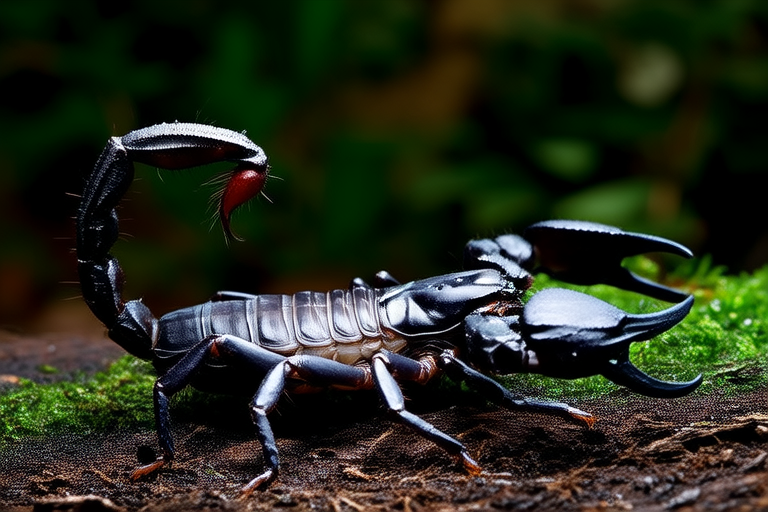
Heterometrus spinifer: The Lesser-Known Arachnid
Deep within the lush forests of Southeast Asia, there exists a fascinating yet lesser-known inhabitant – the Heterometrus spinifer. This unique arachnid is not only a marvel of evolution but also plays a crucial role in its ecosystem. Despite its relative obscurity compared to its more famous cousins like tarantulas or scorpions, the Heterometrus spinifer boasts an array of remarkable traits that make it a subject worthy of exploration and admiration.
Physical Characteristics
The Heterometrus spinifer, commonly known as the Asian forest scorpion, is characterized by its robust body structure and distinctive spines. Reaching lengths of up to 10 centimeters, these creatures exhibit a striking appearance with their dark brown or black exoskeletons adorned with prominent spines along their tail and legs. These spines serve multiple purposes; they act as defensive mechanisms against potential predators while also aiding in climbing and maneuvering through dense vegetation.
One of the most notable features of the Heterometrus spinifer is its powerful pincers located at the front of its body. These pincers are used both for capturing prey and defending itself from threats. Additionally, the species possesses venom glands located near its fangs, which produce a potent neurotoxin capable of immobilizing small animals.
Habitat and Distribution
The Heterometrus spinifer thrives in tropical rainforests across countries such as Thailand, Malaysia, Indonesia, and Vietnam. It prefers humid environments with plenty of leaf litter and fallen branches where it can hide during daylight hours. These habitats provide ample opportunities for hunting and protection from larger predators. The nocturnal nature of this species allows it to remain active after sunset when temperatures drop and humidity increases.
Diet and Behavior
As an opportunistic predator, the Heterometrus spinifer feeds primarily on insects, spiders, and other small invertebrates found within its habitat. Its hunting technique involves lying in wait until prey comes close enough for capture using its quick reflexes and strong pincers. Once subdued, the venomous sting ensures rapid incapacitation before consumption.
Despite being solitary creatures by nature, Heterometrus spinifer individuals will sometimes gather together during mating season. Males engage in elaborate courtship rituals involving displays of their spiny appendages to attract females. After successful copulation, females lay eggs underground in specially prepared burrows where they guard them until hatching occurs approximately two months later.
Role in Ecosystem
In its native ecosystems, the Heterometrus spinifer serves as both predator and prey. By controlling populations of harmful insects, it helps maintain balance within food webs. Additionally, its burrowing activities contribute to soil aeration and nutrient cycling processes essential for plant growth.
Unique Adaptations
Amongst its many adaptations, one stands out – the ability to detect vibrations through specialized sensory organs called slit sensilla located on its legs. This allows the Heterometrus spinifer to sense approaching danger or locate potential meals even in complete darkness.
Comparison with Other Arachnids
When compared to better-known arachnids like tarantulas or scorpions, the Heterometrus spinifer shares some similarities yet remains distinctively unique. Like tarantulas, it relies heavily on ambush tactics for hunting but lacks the latter’s size advantage. In contrast to scorpions, whose stings are often associated with severe pain, the venom produced by Heterometrus spinifer is generally less dangerous to humans unless provoked excessively.
Conservation Status and Threats
Currently classified under ‘Least Concern’ according to the International Union for Conservation of Nature (IUCN), the Heterometrus spinifer faces several challenges threatening its survival. Habitat destruction due to deforestation and urbanization poses significant risks as these practices reduce available living spaces and disrupt natural food chains. Furthermore, illegal collection for pet trade purposes adds another layer of pressure on wild populations.
Fostering Appreciation
Understanding and appreciating the Heterometrus spinifer‘s importance in maintaining healthy ecosystems can inspire efforts towards protecting it and similar lesser-known species. By promoting awareness about their ecological significance, we encourage responsible stewardship over our planet’s biodiversity.
