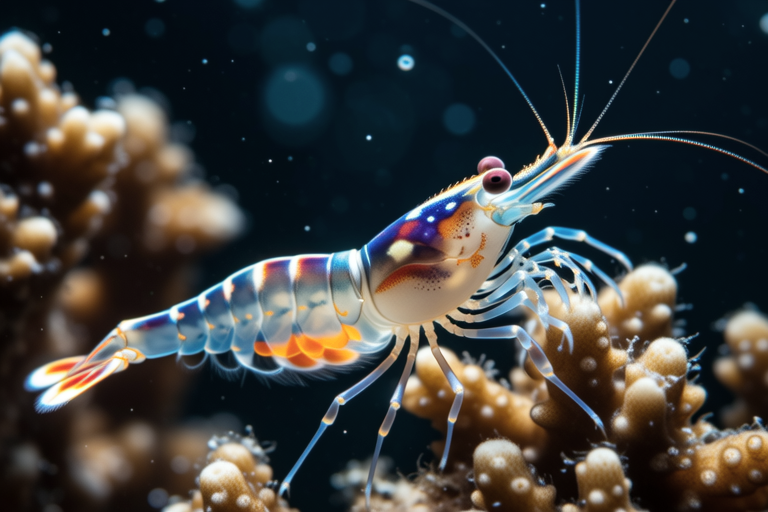
Coral Shrimp Secrets: The Surprising Intelligence Behind Their Tiny Bodies
Imagine a creature so small it could fit in the palm of your hand, yet capable of complex decision-making, intricate communication, and even learning from past experiences. Meet the coral shrimp—a dazzling, jewel-toned inhabitant of tropical reefs that, despite its size, defies expectations with surprising intelligence. Often mistaken for mere decorative ornaments on coral, these tiny crustaceans are actually master strategists of survival, weaving webs of cooperation, signaling, and problem-solving beneath the waves.
For decades, scientists focused on large-brained animals—primates, birds, octopuses—for signs of intelligence. But recent research reveals that even the smallest creatures can possess remarkable cognitive abilities. Coral shrimp, particularly species like *Stenopus hispidus* and *Alpheus heterochaelis*, are now emerging as unexpected stars in the study of animal cognition. Their behaviors challenge long-held assumptions about brain size and mental capacity, proving that intelligence isn’t measured solely by neuron count—but by what an animal can do.
The Anemone Alliance: A Partnership Built on Trust and Strategy
One of the most fascinating aspects of coral shrimp life is their symbiotic relationship with sea anemones. These stinging tentacled predators might seem like deadly foes, but for certain shrimp species, they are trusted allies. How does this work?
Unlike most marine creatures, coral shrimp don’t get stung when they approach or live among anemones. Instead, they’ve evolved a delicate balance—through careful movements and chemical cues—that allows them to “befriend” their hosts. Researchers have observed that coral shrimp carefully groom the anemone’s tentacles, removing parasites and debris. In return, the anemone provides shelter from predators and a steady supply of food scraps.
But here’s where the intelligence shines: not all shrimp attempt this partnership blindly. Studies show that coral shrimp assess potential anemone hosts before settling in. They test the anemone’s response—by gently touching tentacles—and retreat if the reaction is too aggressive. This behavior suggests a level of risk evaluation and decision-making rarely attributed to such small animals.
Dr. Emily Hertel, a marine biologist at the University of Queensland, explains: “It’s not just instinct. These shrimp are making calculated choices based on feedback from their environment. They’re essentially conducting a safety check before committing to a home.”
Colorful Conversations: Decoding Shrimp Signals
If you’ve ever seen a coral shrimp, you know it’s a sight to behold—vivid reds, whites, and blues dancing across its body. But those colors aren’t just for show. They serve as a sophisticated language of warning, attraction, and negotiation.
Scientists have documented that coral shrimp use distinct color patterns and body postures to communicate with each other and even with other reef inhabitants. For instance, when threatened, a shrimp may rapidly wave its claws in a specific rhythm while flashing bright white bands. This “alarm signal” alerts nearby conspecifics (members of the same species) to danger, prompting coordinated escape responses.
Moreover, during mating rituals, male coral shrimp perform elaborate displays—raising their antennae, flicking their tails, and changing color intensity—to attract females. These behaviors suggest a form of visual courtship language, akin to how peacocks display feathers or crickets sing.
A 2020 study published in *Animal Behaviour* analyzed over 300 interactions between coral shrimp pairs. The researchers found consistent patterns in movement sequences and color changes that correlated with specific outcomes—such as territory disputes or mating attempts. “They’re not random,” says Dr. Rajiv Mehta, who led the study. “The signals are purposeful, repeatable, and context-dependent. That’s strong evidence of structured communication.”
Problem-Solving Prowess: Hunting, Hiding, and Outsmarting Predators
Survival in the reef demands more than just camouflage and speed—it requires cleverness. Coral shrimp face constant threats from fish, crabs, and larger invertebrates. Yet they manage to thrive through resourcefulness and adaptability.
Consider their foraging techniques. Coral shrimp don’t rely on brute force to catch prey. Instead, they use stealth and precision. Observations reveal that they often wait near anemone mouths, timing their movements to snatch small crustaceans or bits of food that drift by. Some species even mimic the movements of harmless organisms to avoid detection.
More impressively, experiments conducted in controlled aquarium settings have shown that coral shrimp can learn to solve simple puzzles. In one trial, researchers placed food behind a transparent barrier with a small opening. After initial failed attempts, many shrimp figured out how to navigate the gap using their claws and legs—some within minutes, others after repeated exposure. Crucially, once they learned the trick, they applied it consistently, even when the setup was changed slightly.
This kind of flexible thinking indicates more than simple trial-and-error learning. It points to a form of cognitive flexibility—the ability to adapt strategies based on new information. “They’re not just reacting,” says marine ecologist Dr. Lila Chen. “They’re adjusting their behavior based on experience. That’s a hallmark of learning.”
Even their predator avoidance tactics are nuanced. When startled, some coral shrimp don’t just flee—they freeze. By remaining motionless, they blend into the reef background, mimicking rocks or algae. Others use distraction tactics, shedding a claw to lure predators away while escaping with the rest of their body. This self-amputation, known as autotomy, is not just reflexive—it’s a calculated trade-off, sacrificing part of the body to preserve life.
Memory and Learning: Remembering Faces, Places, and Past Mistakes
Can a shrimp remember? At first glance, it seems absurd. But evidence is mounting that coral shrimp possess both short- and long-term memory.
In laboratory tests, shrimp were trained to associate certain colors with rewards (like food) or punishments (like mild electric shocks). Over time, they began avoiding the “bad” color and approaching the “good” one—even when tested days later. This demonstrates retention of information beyond immediate stimuli.
One groundbreaking experiment involved tracking individual coral shrimp across multiple sessions. Researchers noted that shrimp which had previously been attacked by a predator were significantly quicker to react to similar threats in future encounters. They also showed less hesitation when approaching a potentially dangerous area after having successfully navigated it before. This suggests not only memory of events but also emotional learning—where past fear influences present decisions.
“We used to think memory required complex brains,” says Dr. Mehta. “But coral shrimp, with their compact nervous systems, still manage to store and retrieve information effectively. It challenges our entire understanding of what memory looks like across species.”
Why Tiny Brains Can Think Big
So why do such small creatures exhibit such advanced behaviors? The answer lies in evolution. In the high-stakes world of coral reefs—where every second counts—intelligence offers a survival advantage. Even minimal neural processing can yield powerful results when finely tuned by natural selection.
While coral shrimp lack the massive brains of dolphins or crows, their nervous systems are highly efficient. They process sensory input quickly, respond to environmental cues with precision, and make split-second decisions that determine life or death. Their intelligence isn’t about volume; it’s about quality and adaptation.
Furthermore, their social complexity contributes to cognitive development. Living in close-knit communities with defined roles—territory defense, grooming, mating—requires coordination and recognition. Shrimp must distinguish between friends and foes, remember alliances, and adjust behavior accordingly. These social demands likely drive the evolution of learning and memory.
A Call for Recognition: More Than Just Pretty Decorations
Despite their beauty and behavioral sophistication, coral shrimp remain underappreciated in public consciousness. They’re often dismissed as colorful curiosities rather than intelligent beings. Yet, their story reminds us that intelligence comes in many forms—and size is no measure of capability.
By studying coral shrimp, scientists gain insights not only into animal cognition but also into broader ecological dynamics. Understanding how these tiny creatures interact with their environment helps us better protect fragile reef ecosystems. If we recognize their intelligence, we may be more motivated to conserve their habitats.
Moreover, the lessons from coral shrimp challenge anthropocentric views of intelligence. We tend to equate smarts with human-like reasoning or tool use. But nature thrives on diversity—each species evolves its own solutions. The coral shrimp teaches us that brilliance can be quiet, subtle, and beautifully hidden in plain sight.
Next time you gaze upon a coral reef, pause at the shimmering flash of a coral shrimp darting between anemones. Don’t just admire its colors. Consider the mind behind the movement—the tiny brain crafting decisions, sending signals, remembering dangers, and building alliances. In their minuscule bodies, there beats a remarkable spirit of resilience, strategy, and thought.
These are not just ornamental creatures. They are survivors, communicators, learners, and innovators. And in a world increasingly aware of biodiversity loss, their story serves as a powerful reminder: intelligence doesn’t need to be loud to matter. Sometimes, the most profound minds are the ones that whisper from the reef.
