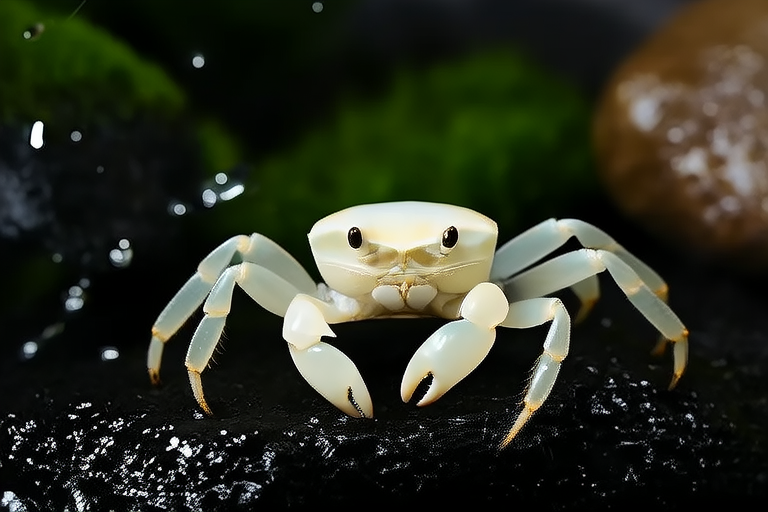
The Smallest Crab Species: A Microscopic Marvel
Crabs, with their iconic pincers and sideways gait, have captured the imagination of many. From the giant Japanese spider crab to the delicate hermit crabs, these crustaceans come in various shapes and sizes. However, there exists a group of crabs so diminutive that they are often overlooked by even the most seasoned marine biologists. These are the smallest crab species, which, despite their size, offer a wealth of information about adaptation, survival, and the intricate web of life in the ocean. This article delves into the fascinating world of the smallest crab species, exploring their unique characteristics, habitats, and the challenges researchers face in studying these tiny creatures.
Unique Characteristics of the Smallest Crabs
The smallest crab species, known as Lybia potatoria, commonly referred to as the boxer crab or pom-pom crab, is among the tiniest members of the crab family. Adult boxer crabs typically reach a width of less than half an inch (1.27 cm), making them one of the smallest crab species in the world. Their small size is complemented by striking features, including bright red claws that resemble boxing gloves, hence the common name. These claws are not just ornamental; they serve as a vital tool in the crab’s survival strategy.
Boxer crabs are also known for their symbiotic relationship with sea anemones. They carry these small, venomous anemones in their claws, which act as both weapons and shields. The anemones deter predators while also providing the crab with a ready source of food through the transfer of nutrients from the crab’s meals to the anemones. This unique partnership showcases the complexity of marine ecosystems and the importance of symbiosis in survival.
Habitat and Adaptations
These minuscule crabs inhabit coral reefs, where they find ample hiding spots among the nooks and crannies of the reef structure. Coral reefs provide an ideal environment for the boxer crab, offering protection from larger predators and a diverse array of prey. The reef’s vibrant ecosystem supports a wide range of microhabitats, each tailored to the needs of different species. Boxer crabs have adapted to this environment by developing a stealthy hunting technique that involves waving their anemone-tipped claws to lure unsuspecting prey towards them.
Their small size is a significant advantage in this competitive environment. It allows them to exploit spaces that larger crabs cannot access, ensuring a steady supply of food. Additionally, their ability to move quickly and efficiently within the complex architecture of the reef enables them to escape predators and secure safe havens.
Challenges in Studying the Smallest Crabs
Despite their importance, studying the smallest crab species presents several challenges. One major obstacle is their microscopic size, which makes them difficult to observe in the wild. Researchers must rely on advanced technology, such as high-resolution cameras and specialized diving equipment, to study these creatures in their natural habitat. Another challenge is the limited amount of data available about their behavior, diet, and reproduction cycles. Due to their elusive nature, much of what we know about these crabs comes from laboratory studies rather than field observations.
Furthermore, the delicate nature of their symbiotic relationships with sea anemones complicates the study of their interactions. Disrupting these relationships can lead to significant changes in the crabs’ behavior and survival rates, making it essential to conduct research with great care and precision.
Recent Discoveries and Conservation Efforts
In recent years, there have been several notable discoveries related to the smallest crab species. For instance, scientists have identified new species of crabs that were previously unknown to science. One such discovery was made in the waters off the coast of Indonesia, where a team of researchers found a new species of crab that is even smaller than the boxer crab. This discovery underscores the vastness of our oceans and the countless species that remain to be discovered.
Conservation efforts aimed at protecting these tiny creatures and their habitats are also gaining momentum. Coral reefs, the primary habitat of the smallest crabs, are under threat due to climate change, pollution, and overfishing. To address these issues, organizations are working to establish marine protected areas and promote sustainable fishing practices. By preserving the health of coral reefs, we can help ensure the survival of the smallest crab species and the myriad of other organisms that depend on these ecosystems.
Comparison with Other Crab Species
When compared to other crab species, the smallest crabs stand out for their unique characteristics and adaptations. While larger crabs, like the blue crab or the king crab, are well-known for their impressive size and strength, the smallest crabs excel in agility and adaptability. Their ability to thrive in highly competitive environments, despite their small size, is a testament to the power of evolution and the diversity of life in the ocean.
Moreover, the symbiotic relationship between the boxer crab and the sea anemone sets them apart from other crab species. While some crabs form similar partnerships with other organisms, none have developed quite the same level of specialization as the boxer crab. This unique relationship highlights the complexity of marine ecosystems and the intricate balance that exists between different species.
Potential Ecological Impacts
Understanding the smallest crab species has important implications for broader environmental understanding. These creatures play a crucial role in the marine food web, serving as both predators and prey. By studying their behavior and interactions with other organisms, researchers can gain valuable insights into the dynamics of marine ecosystems and the factors that influence their health and stability.
Additionally, the smallest crabs may serve as indicators of environmental change. As sensitive to shifts in their environment as they are to their own ecological niches, these tiny creatures could provide early warnings of threats to coral reefs and other marine habitats. By monitoring the health and distribution of the smallest crab species, scientists can better understand the impact of human activities on marine ecosystems and develop strategies to mitigate these effects.
Conclusion
The smallest crab species, with their unique characteristics, adaptations, and symbiotic relationships, offer a window into the wonders of the marine world. Despite the challenges researchers face in studying these tiny creatures, ongoing efforts to understand and protect them are yielding valuable insights into the complexities of marine ecosystems. As we continue to explore the depths of the ocean, it is clear that the smallest crabs have much to teach us about survival, adaptation, and the interconnectedness of life.
