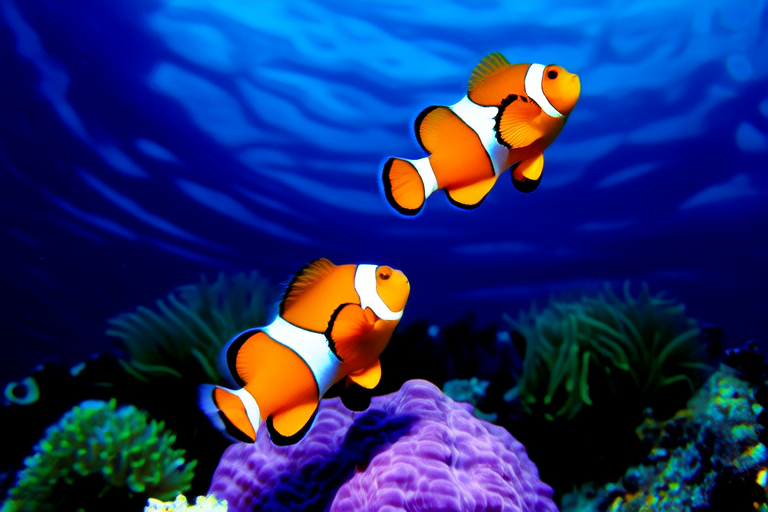
The Underwater World of Clownfish: A Journey Through Behavior, Habitat, and Symbiosis
Imagine diving into the vibrant, bustling world of coral reefs, where colorful fish dart between soft corals and hard structures. Amidst this kaleidoscope of marine life, one species stands out for its striking appearance and unique relationship with sea anemones—the clownfish. These small, vibrant creatures have captured the hearts of many with their bold stripes and daring antics, but there is much more to them than meets the eye. This article delves into the fascinating behaviors, habitats, and symbiotic relationships of clownfish, offering a glimpse into their complex lives and the critical roles they play in maintaining the health of coral reef ecosystems.
Home Sweet Anemone
Clownfish, also known as anemonefish, have evolved a remarkable partnership with sea anemones, which provides them with shelter and protection from predators. The anemone’s stinging tentacles, packed with nematocysts—tiny, venomous cells—usually deter other fish, but clownfish have developed a special mucus layer on their skin that prevents the anemone from recognizing them as prey. This adaptation allows clownfish to live among the anemone’s tentacles, where they find safety and food.
Clownfish exhibit a unique behavior called “anemone fanning,” where they swim around the anemone, fanning their fins to keep it clean and healthy. In return, the anemone provides the clownfish with a safe haven from larger predatory fish. This mutualistic relationship benefits both parties, ensuring the survival of both species in the challenging environment of the coral reef.
Building a Family
Clownfish live in close-knit family groups within their anemone homes. Typically, each group consists of a dominant breeding pair and several non-breeding members. The breeding pair is responsible for producing offspring, while the non-breeders assist in caring for the eggs and defending the territory. This social structure ensures the survival of the group and maximizes reproductive success.
The breeding process begins when the female lays her eggs on a flat surface near the anemone, usually during a full moon. The male then fertilizes the eggs by releasing sperm over them. Both parents take turns guarding the eggs, fanning them to ensure proper oxygenation and removing debris. After about six to ten days, the eggs hatch, releasing tiny, transparent larvae that float away with ocean currents. Only a small percentage of these larvae will survive to become adult clownfish, making successful reproduction crucial for the species’ survival.
Navigating the Currents
Life in the ocean is not without its challenges, and clownfish must navigate strong ocean currents to find food and avoid predators. Their streamlined bodies and powerful fins allow them to swim efficiently through the water, while their keen senses help them detect changes in pressure and temperature, enabling them to anticipate shifts in current direction. Additionally, clownfish often form schools, swimming together to increase their chances of survival and reduce the risk of predation.
Recent scientific studies have revealed that clownfish possess a remarkable ability to adapt to changing environmental conditions. For instance, researchers have observed that clownfish can adjust their metabolism and behavior in response to variations in water temperature and acidity, allowing them to thrive in diverse marine environments. This adaptability is crucial for their survival in the face of climate change and ocean acidification, which pose significant threats to coral reef ecosystems.
Social Structures and Communication
Within their family groups, clownfish establish a clear hierarchy, with the largest and most dominant individual serving as the leader. This individual is typically the breeding female, while the next-largest fish is the breeding male. The remaining individuals are non-breeders who assist in caring for the young and defending the territory. Despite this rigid hierarchy, clownfish engage in complex social interactions, including displays of aggression, submission, and cooperation.
Communication plays a vital role in maintaining harmony within the group. Clownfish use a combination of visual cues, such as body posture and color changes, and chemical signals, such as pheromones, to convey information to one another. For example, when a clownfish approaches the anemone, it may perform a series of rapid fin flicks to signal its presence and intention to enter the anemone’s territory. This behavior helps prevent unnecessary conflicts and promotes cooperation among group members.
The Role of Clownfish in Coral Reef Ecosystems
Coral reefs are some of the most biodiverse ecosystems on the planet, supporting a wide array of marine life. Clownfish play a crucial role in maintaining the health of these ecosystems by controlling the population of small invertebrates that feed on coral polyps. By preying on these herbivores, clownfish help prevent overgrazing and promote the growth of new coral colonies. Additionally, clownfish contribute to the overall biodiversity of coral reefs by serving as prey for larger predators, thus facilitating the flow of energy through the ecosystem.
Recent research has shed light on the intricate web of interactions that shape coral reef ecosystems. Scientists have discovered that clownfish can influence the behavior of other reef inhabitants, such as sea turtles and sharks, by altering the distribution and abundance of their prey. This finding highlights the importance of clownfish in maintaining the balance of coral reef ecosystems and underscores the need for conservation efforts to protect these fragile environments.
Challenges and Conservation Efforts
Despite their adaptability, clownfish face numerous threats in the modern world, including habitat destruction, pollution, and overfishing. Coral reefs are particularly vulnerable to these pressures, as they are sensitive to changes in water temperature, acidity, and nutrient levels. As a result, clownfish populations have declined in many areas, raising concerns about the long-term viability of coral reef ecosystems.
To address these challenges, conservationists have implemented various strategies to protect clownfish and their habitats. Marine protected areas (MPAs) have been established in key regions to limit fishing and other human activities that threaten coral reefs. Additionally, efforts to reduce pollution and combat climate change are underway, with the goal of preserving the delicate balance of marine ecosystems. Education and awareness campaigns aim to inform the public about the importance of clownfish and coral reefs, encouraging people to take action to protect these valuable resources.
Conclusion
The clownfish is a fascinating creature, whose unique behaviors, habitats, and symbiotic relationships offer a window into the complexity of marine ecosystems. From their daring antics in the anemone to their intricate social structures and vital role in coral reef ecosystems, clownfish embody the resilience and adaptability of life in the ocean. As we continue to explore the mysteries of the underwater world, it is essential to recognize the importance of clownfish and their habitats, and to work towards preserving these precious resources for future generations.
