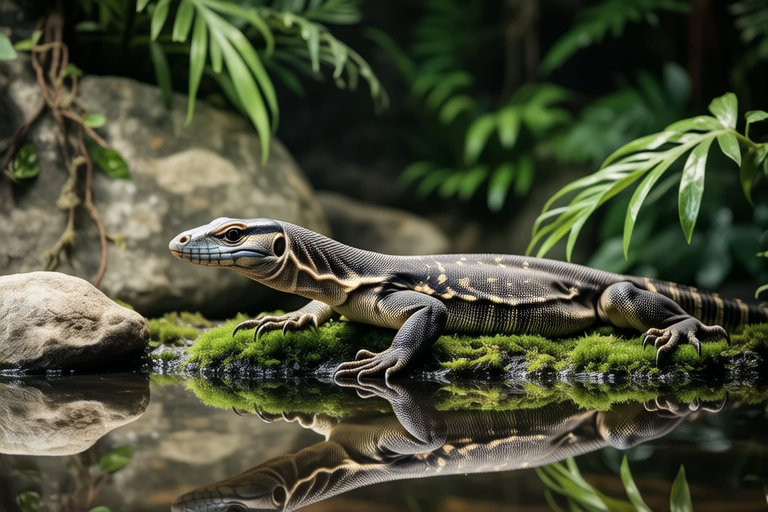
From Jungle to Home: How to Successfully Care for a Water Monitor
The water monitor (Varanus salvator) is one of the largest lizards in the world, native to Southeast Asia’s tropical forests and wetlands. With their sleek, muscular bodies, powerful tails, and sharp claws, these reptiles are formidable predators in the wild. Their ability to thrive both in water and on land makes them fascinating creatures, but this also means they require specialized care when kept as pets. This guide will walk you through everything you need to know about caring for a water monitor, from setting up their habitat to ensuring their health and well-being.
Habitat Setup
Tank Size
Aquariums are often inadequate for housing water monitors due to their large size and active nature. A custom-built enclosure is preferable, with a minimum floor space of 8 feet by 4 feet for adults. The height should be at least 6 feet to allow ample climbing space.
Substrate
Choosing the right substrate is crucial. Avoid fine substrates like sand, which can cause impaction if ingested. Instead, opt for large gravel or cypress mulch, which can retain moisture and mimic the natural environment. Regularly clean the substrate to prevent bacterial growth.
Temperature and Humidity
Water monitors need a warm environment. Maintain a basking spot of around 95-100°F (35-38°C) and cooler areas around 75-85°F (24-29°C). Use thermometers to monitor temperatures accurately. Humidity levels should be between 60% and 80%. Proper humidity is vital for shedding and overall health.
Lighting Requirements
Provide UVB lighting to help your monitor synthesize vitamin D3, essential for calcium absorption. Ensure the light is positioned correctly and replaced every six months. Full-spectrum lighting is also recommended for 12 hours a day to simulate daylight cycles.
Dietary Needs
Water monitors are carnivorous and require a varied diet rich in protein. Feed them appropriately sized rodents, insects, and occasionally fish. Young monitors should eat daily, while adults can be fed every two to three days. Ensure the food is pre-killed to avoid injury to your pet.
Health Concerns
Common health issues include metabolic bone disease (MBD), respiratory infections, and parasites. Preventive care includes regular veterinary check-ups, proper nutrition, and maintaining optimal environmental conditions. Early signs of illness, such as lethargy or loss of appetite, should prompt immediate attention.
Handling and Socialization
Water monitors can become accustomed to handling over time, but they are not typically cuddly pets. Always approach them calmly and slowly, allowing them to get used to your presence. Regular gentle handling sessions can help build trust. However, always respect their boundaries and provide a secure escape route if needed.
Sourcing a Healthy Monitor
When acquiring a water monitor, it’s crucial to source them from reputable breeders or rescues. Look for clear eyes, healthy skin, and an active demeanor. Avoid purchasing animals from questionable sources, as they may have been mistreated or come from unhealthy environments.
