The Colorful Life of Clownfish: Insights into Their Vibrant World
Introduction
In the vast and mysterious ocean, few creatures capture the imagination quite like the clownfish. With their vibrant colors and unique behaviors, these fish have become iconic symbols of marine life. Found primarily in the tropical waters of the Indo-Pacific region, clownfish live in a world of constant movement and hidden dangers. This article delves into the colorful life of clownfish, exploring their unique characteristics, behaviors, and habitats. We will also examine their symbiotic relationship with sea anemones, their vibrant coloration, and how these traits contribute to their survival. Additionally, we will look at the challenges they face in the wild and the conservation efforts being made to protect them.
A World of Color and Contrast
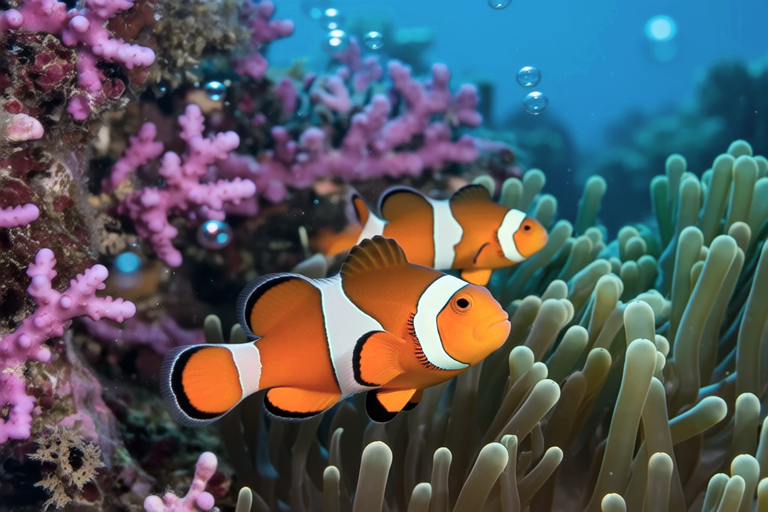
The clownfish, scientifically known as Amphiprioninae, are perhaps best recognized for their striking color patterns. Typically, these fish sport a mix of orange, white, and black stripes, although variations exist among the 30 different species. These bold hues serve multiple purposes in their underwater environment. Firstly, the colors act as a form of camouflage within their reef habitats, helping them blend into the coral and algae-rich surroundings. Secondly, the vivid stripes may serve as a warning signal to potential predators, indicating that the fish are toxic due to their diet of anemone tentacles.
One lesser-known fact about clownfish is their ability to change color. Juvenile clownfish often start off as transparent and develop their characteristic colors as they mature. This color transition is not just aesthetically pleasing but also crucial for their survival, as it helps them avoid predation during their vulnerable early stages.
The Symbiotic Dance with Sea Anemones
The relationship between clownfish and sea anemones is one of nature’s most fascinating examples of mutualism. Clownfish live among the tentacles of sea anemones, which provide them with protection from predators. The anemone’s stinging cells, called nematocysts, deter most fish from approaching. However, clownfish have developed a layer of mucus on their skin that protects them from the anemone’s sting. In return, the clownfish help the anemone by driving away butterfly fish, which feed on the anemone’s tentacles. They also bring nutrients to the anemone through their waste and help circulate water around the anemone, aiding in its respiration.
This symbiotic relationship is not only beneficial for the clownfish but also for the anemone. Clownfish can increase the growth rate of their host anemones by up to 40%, thanks to the nutrients they provide. Moreover, clownfish can defend their anemone against intruders, including other fish and even larger predators like triggerfish. This defense mechanism ensures that the anemone remains undisturbed and continues to thrive.
Beyond the Reef: Clownfish Behavior
Clownfish are highly social creatures, living in groups that typically consist of a single breeding pair and several non-breeding individuals. These groups, or harems, are led by the largest female and her mate. The hierarchy within the group is strictly enforced, with the dominant pair monopolizing reproduction. Interestingly, if the dominant female dies, the largest male in the harem undergoes a remarkable transformation. It changes sex, becoming the new dominant female and taking over reproduction.
Clownfish exhibit a variety of behaviors that are both fascinating and essential for their survival. For instance, they are known to perform elaborate dances around their anemone hosts, which may serve to strengthen the bond between the two species. Additionally, clownfish communicate through a series of grunts and pops produced by grinding their pharyngeal teeth together. These sounds are thought to play a role in maintaining the group’s social structure and coordinating group activities.
The Challenges of Survival
Despite their adaptations and protective relationships, clownfish face numerous challenges in their natural habitat. One of the biggest threats comes from environmental factors such as rising ocean temperatures and pollution. As global warming continues to affect the oceans, coral reefs, which provide essential shelter for clownfish, are under threat. Bleaching events, where corals expel the algae living in their tissues, can devastate entire reef ecosystems, leaving clownfish without homes.
Pollution, particularly plastic debris and chemical runoff, poses another significant danger. Plastic waste can entangle and suffocate clownfish, while chemicals can disrupt their endocrine systems, affecting their reproductive abilities. Furthermore, overfishing and habitat destruction further reduce the availability of suitable environments for clownfish.
Conservation Efforts and Hope for the Future
To address these challenges, various conservation efforts are underway to protect clownfish and their habitats. Marine protected areas (MPAs) have been established to safeguard critical reef ecosystems, providing safe havens for clownfish and other marine species. Additionally, organizations are working to raise awareness about the importance of reducing plastic waste and promoting sustainable fishing practices.
One innovative approach involves breeding programs aimed at increasing clownfish populations. These programs involve raising clownfish in controlled environments and then releasing them back into the wild. By doing so, these initiatives help boost local populations and ensure genetic diversity. Moreover, research into the effects of climate change on clownfish is ongoing, with scientists seeking ways to mitigate the impacts on these beloved fish.
The Underwater World of Clownfish
Imagine diving into the vibrant world of clownfish. As you descend into the warm, tropical waters, you are greeted by the dazzling array of colors and shapes that make up the coral reef. The reef itself is a bustling city, teeming with life. Schools of colorful fish dart between the coral formations, while sea turtles graze on the algae-covered rocks. Among this bustling activity, you spot a cluster of sea anemones, their tentacles waving gently in the current.
Approaching one of these anemones, you notice a small group of clownfish swimming among the tentacles. Their bright orange bodies contrast beautifully with the green and brown hues of the anemone. As you watch, the clownfish engage in their intricate dance, weaving in and out of the tentacles with grace and precision. Occasionally, they pause to nibble on the anemone’s tentacles, a behavior that seems both playful and practical.
The reef is not just a place of beauty; it is also a place of danger. Predators lurk in the shadows, waiting for an opportunity to strike. But for the clownfish, their partnership with the anemone provides a sanctuary. The stinging tentacles serve as a formidable barrier, protecting them from harm. Even as larger fish swim past, the clownfish remain safe within their anemone fortress.
Conclusion
The colorful life of clownfish is a testament to the wonders of nature. From their vibrant coloration to their symbiotic relationship with sea anemones, these fish have adapted in remarkable ways to survive in their underwater world. While they face numerous challenges, ongoing conservation efforts offer hope for their future. By understanding and appreciating the complex lives of clownfish, we can work towards preserving the delicate balance of our oceans.
